In many plants the morning meeting begins the same way. Someone has been in since early, building yesterday's figures from several files. Production has one output number, the warehouse has another. The first ten minutes are spent on agreeing what happened. The next ten are spent on explaining it. Then time runs out, and the actions are the same as last week's.
A good morning meeting is short, and it runs on facts everyone already accepts.
One version of yesterday
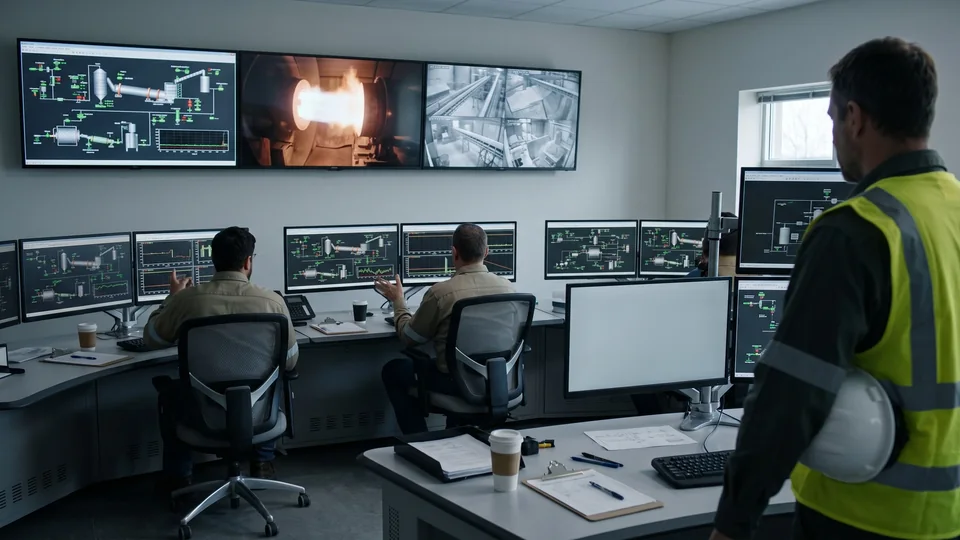
The meeting needs one board, and every department has to be looking at the same one. For most process plants that board covers safety, output against plan, OEE, quality, energy and downtime.
Two rules make the numbers trusted:
- Calculate from raw readings. A percentage typed in by hand cannot be checked. A figure worked out from the readings themselves, against the plant's own targets, can.
- Show what is missing. If a reading was not entered, the board should say so. A gap that is hidden gets filled with a guess.
OEE in plain words
Overall equipment effectiveness (OEE) answers one question: compared with running the whole planned time at the right speed with no rejects, how much good product did we actually make? It multiplies three things together.
- Availability: the share of planned time the line was actually running.
- Performance: what the line made while it was running, compared with the rate it should run at. Small stops and slow running both show here.
- Quality: the share of what it made that was right first time.
Behind those three sit the six big losses: breakdowns, set-ups and adjustments, small stops, reduced speed, start-up rejects and production rejects. The OEE figure tells you how much was lost. The six losses tell you where to look.
OEE is most useful as a trend on one line. It is a poor way to compare two very different lines, and it should never become a target people defend by changing what counts as planned time.
Every miss gets an owner
The purpose of the meeting is not to review numbers. It is to decide who does what about the ones that missed.
- Every missed target gets an action, with a named owner and a due date.
- The action stays on the board until it is done. Nothing is agreed and then forgotten.
- A missed target with no action against it should stand out.
Send problems up, bring decisions down
Some problems cannot be solved by the team that found them. They need a budget, another department or a decision from the plant manager. Tiered daily management deals with this. The line team meets first, then the department, then the plant. What a team cannot solve goes up to the next board, and the decision comes back down.
And when a miss repeats, it should stop being an action and become an investigation. A problem that comes back needs its cause found, not another line on the list.
A simple test
Time the first ten minutes of tomorrow's meeting. If they are spent on what the numbers are, the board needs work. If they are spent on what to do about them, the meeting is doing its job.
How EXLATECH helps: PULSE builds yesterday's board from the plant's own reports before the meeting starts, and flags every missed target until it has an owner. Book a demo with your own numbers from last month.