
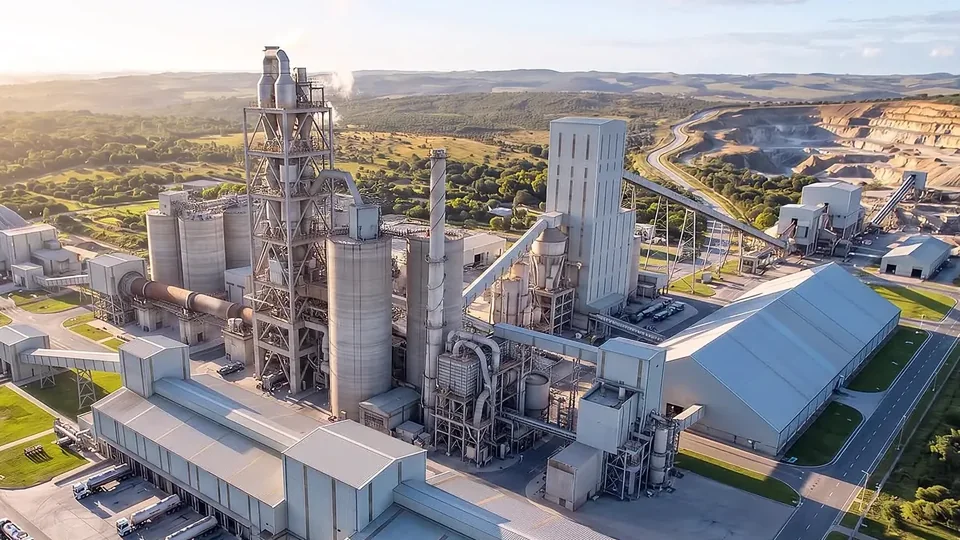
Cement
Kiln run factor is made on the shift, not in the shutdown.
Cement plant maintenance in the UAE and the GCC: keep the kiln on line, stop raw mill and finish mill trips, and plan the next shutdown from the failures, not the manual.
Where the losses hide
The stops that cost a cement plant most.
Rotary kiln
Girth gear, tyres and the kiln shell: the failures a time-based plan never covered.
Raw and finish mills
Vibration trips and repeat stops that eat the run factor.
Conveyors and air slides
Small dust leaks and spillage that grow into stops.

Four apps, set up for cement.

A cement plant RCM programme: the kiln girth gear, mills and the protections nobody tests, each task with its reason.
For cement →
Clinker and cement against plan, kiln run factor and energy per tonne on one board before 8 a.m.
For cement →
Raw mill tripping on vibration? Likely causes first, and the fix proven by the clock.
For cement →
A little dust at an air slide, tagged with a photo and closed only with the after photo.
For cement →
The engineering intelligence built into every OPEX Suite app, working alongside your engineers. They stay in charge of every decision.
One case, start to finish
The kiln missed its clinker plan.
- 01
On the board by 6:30
The miss is on the Plant screen; before 8 a.m. it has an owner and goes to EDPS.
- 02
The cause, proven
Raw mill 1 kept tripping on vibration and everyone blamed the hydraulics. EDPS ruled that out; the cause was two scaled water-spray nozzles.
- 03
Fixed, by the clock
New nozzle tips, and the mill ran its test period without a trip. Two days later the kiln was back on plan.
- 04
In the plan
The kiln girth gear, never in the old plan, now has its own inspection task with a reason.
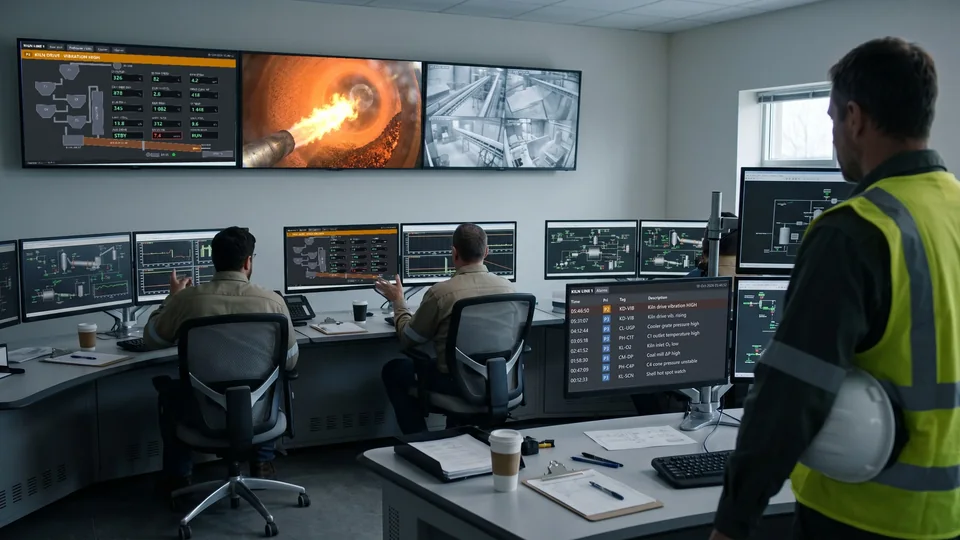
Advice as well as software
Need help on the floor too?
TPM and operational excellence consulting with your own team: see how we work with plants.
Other industries
Bring one machine that keeps stopping.
In a 30-minute demo, we'll show you how the four apps handle it, from the first tag to the fix that stays.